


Please Leave Us A Message
Privacy statement: Your privacy is very important to Us. Our company promises not to disclose your personal information to any external company with out your explicit permission.
 Jiangsu Changshu Vast Import and Export Trade Co.,LTD
Select Language
English


Metal shopping trolleys are the backbone of modern retail logistics, serving as the primary tool for customer self-service and product transportation within supermarkets, hypermarkets, and warehouse clubs. Constructed from durable steel wire with chrome or powder-coated finishes, these carts combine structural integrity with ergonomic design to handle heavy loads while maintaining a sleek aesthetic that complements store environments.
For procurement buyers, understanding the engineering behind these trolleys is essential. The frame geometry, wheel configuration, and basket capacity directly impact operational efficiency, customer satisfaction, and total cost of ownership. High-quality metal construction ensures longevity even under high-frequency commercial use, reducing replacement cycles and maintenance costs over time.
Jiangsu Changshu Vast Import and Export Trade Co., LTD operates as an integrated industry-trade enterprise, combining research, design, manufacturing, and production capabilities under one roof. This vertical integration allows strict quality control at every stage of the metal shopping trolley production process, from raw material selection to final assembly.
The company's dedicated subsidiary, Changshu Xinyang Commercial Equipment Co., Ltd., specializes in supermarket shelf accessories and trolley series products. With advanced welding, bending, and forming equipment, they ensure consistent structural integrity across every unit produced. Their commitment to "product quality strives for survival" translates into rigorous testing protocols that verify load-bearing capacity, wheel durability, and weld strength before any batch ships.
With more than 100 kinds of products spanning steel and wood shelf series, wire basket series, promotional cage series, logistics car series, and trolley series, the company has developed deep expertise in commercial equipment manufacturing. This breadth of experience means buyers benefit from refined production techniques honed across diverse product lines, resulting in superior metal shopping trolleys built for demanding retail environments.
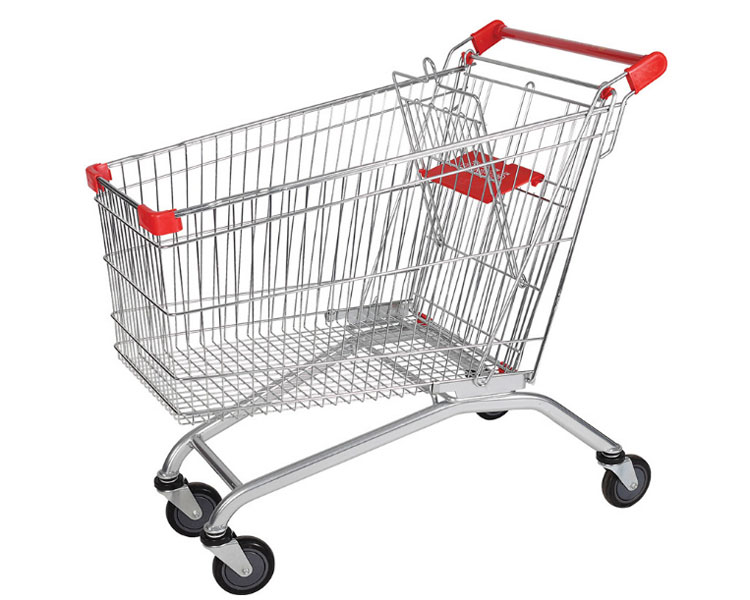
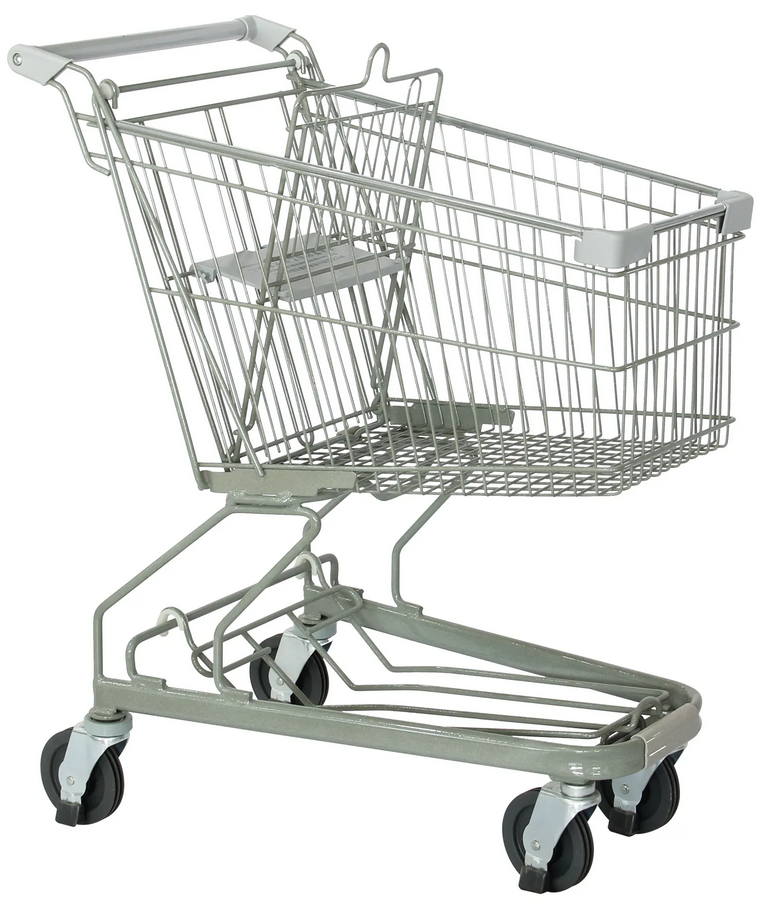
Selecting the correct metal shopping trolleys requires balancing multiple factors: basket volume, maneuverability, storage footprint, and total lifecycle cost. Buyers must evaluate their specific retail format—whether standard grocery, hypermarket, warehouse club, or specialty store—to determine the optimal trolley specifications that serve both customer needs and operational efficiency.
Standard trolleys typically range from 90 to 130 liters, while large-capacity models can exceed 200 liters for warehouse-style retailers. Consider whether your customers need single-basket or dual-basket configurations, foldable child seats, or specialized compartments for fragile items. The right capacity reduces the number of trips per customer while minimizing the floor space required for cart corrals.
Wheel quality is the single most critical factor in trolley performance. Premium polyurethane or rubber wheels provide smooth rolling, quiet operation, and floor protection—critical for maintaining a positive shopping experience. Swivel front wheels with braking capability on rear wheels offer superior control, especially when loaded. Evaluate wheel bearings for sealed designs that resist dirt and debris accumulation.
Steel wire frames should feature chrome plating or powder coating for corrosion resistance, particularly in humid environments or regions with harsh winters. Thicker gauge wire and reinforced weld points extend service life significantly. Powder-coated finishes offer greater color consistency and scratch resistance compared to standard chrome, making them ideal for high-traffic retail locations.
Use this comprehensive checklist to evaluate potential suppliers and ensure your metal shopping trolley purchase meets all operational requirements. Each item addresses a key decision point that impacts long-term value and retailer satisfaction.
Metal shopping trolleys serve diverse retail sectors, each with unique operational demands that dictate specific trolley configurations and features. Understanding these applications helps buyers select the right product mix for their particular market segment.
Standard 90-110 liter trolleys dominate conventional supermarkets. Features like foldable child seats, coin deposit mechanisms, and compact nesting capabilities are essential. Smooth-rolling wheels protect delicate flooring in fresh produce and bakery departments.
Large-capacity 150-200+ liter trolleys designed for bulk purchasing. Reinforced frames handle heavier loads, while wider baskets accommodate pallet-sized purchases. Durable industrial-grade wheels withstand high-volume daily use across expansive retail floors.
Compact hand baskets and mini trolleys suit smaller footprints. Lightweight designs allow easy handling in narrow aisles. Some stores deploy wheeled caddies instead of full trolleys to maximize throughput in quick-transaction environments.
Specialized trolleys with smooth, quiet operation prioritize customer comfort. Anti-static coatings and easy-clean surfaces address hygiene requirements. Compact models navigate tighter shelving arrangements common in pharmaceutical retail.
Premium-finish trolleys with chrome or colored powder coatings complement upscale store aesthetics. Elegant designs reinforce brand positioning while providing functional shopping assistance. Often paired with basket-only options for fashion retail contexts.
Heavy-duty logistics carts and warehouse trolleys support internal material handling. Steel mesh baskets provide visibility and ventilation. Stackable designs optimize storage when not in use. Built for industrial environments rather than customer-facing retail spaces.
Procurement buyers often encounter recurring challenges when sourcing metal shopping trolleys from international manufacturers. Awareness of these common pitfalls enables better supplier evaluation and prevents costly mistakes in your purchasing decisions.
The most frequent complaint involves wheel degradation—rough rolling, premature bearing failure, or floor damage. Low-cost suppliers cut corners on bearing quality and wheel materials. Always request wheel specifications and test samples before committing to bulk orders.
Chrome plating that chips or powder coating that fades within months signals inadequate surface treatment. This is especially problematic in humid climates or regions using de-icing salts. Demand salt spray test reports and verify coating thickness specifications from your supplier.
Trolleys that don't nest tightly waste valuable corral space and create tripping hazards. Inconsistent frame dimensions from poorly controlled manufacturing lead to misaligned nesting. Source from manufacturers with precise CNC-controlled forming equipment and strict dimensional tolerances.
Frames that bend or welds that crack when fully loaded represent serious quality failures. This often stems from using underspecified wire gauges or insufficient weld penetration. Verify load test certifications and inspect weld quality closely on pre-production samples.
Dented baskets, scratched finishes, and broken components arriving damaged indicate inadequate packaging design. Nested packing without proper separation causes inter-unit abrasion. Require suppliers to demonstrate robust stackable carton packaging with corner protection and stretch wrapping.
Cross-border procurement introduces language barriers, timezone differences, and cultural gaps that delay responses and complicate specification changes. Partner with established trading companies that bridge these gaps professionally and maintain transparent communication throughout the order lifecycle.
When selecting a supplier for metal shopping trolleys, look for manufacturers with proven track records, integrated production capabilities, and a commitment to quality-driven growth. The following recommendations highlight key criteria for evaluating potential partners.
Suppliers that combine manufacturing with trading operations—like Jiangsu Changshu Vast Import and Export Trade Co., LTD—offer significant advantages. They control production quality directly while providing professional export services, competitive pricing, and streamlined communication. This model eliminates middleman markups while ensuring factory-direct accountability.
Look for companies with dedicated manufacturing subsidiaries, advanced production equipment, and a broad product portfolio spanning multiple retail equipment categories. This indicates mature operations capable of scaling to meet your growing needs.
Prioritize suppliers that invest in advanced welding, bending, and forming technology. These capabilities directly translate to stronger welds, tighter dimensional tolerances, and more consistent finish application. Companies displaying "advanced equipment and production technology" in their profiles signal genuine manufacturing competence.
Evaluate their product range breadth—suppliers offering 100+ product types across shelves, hooks, baskets, cages, and trolleys demonstrate deep expertise in commercial equipment. This breadth means refined processes and cross-product quality insights that benefit every item you purchase.
The best suppliers emphasize quality as their foundation for survival and trustworthiness as their development strategy. Seek partners whose corporate philosophy reflects these values through verifiable actions—consistent customer praise, repeat business relationships, and willingness to engage openly with feedback and negotiation.
Verify that suppliers actively develop new products and continuously improve existing ones. Innovation-driven manufacturers stay ahead of retail trends, offering you access to the latest trolley designs, materials, and features that keep your retail operation competitive.
Choose suppliers with proven export experience and distant market presence. Companies whose products "sell in distant markets everywhere" have navigated complex international logistics, compliance requirements, and quality expectations successfully. This experience benefits you through reliable shipping, proper documentation, and culturally competent communication.
Confirm the supplier welcomes international visitors for factory audits and business negotiations. Transparency and openness to on-site evaluation are strong indicators of confidence in manufacturing capabilities and willingness to build long-term partnerships.
Get answers to the most common questions procurement buyers ask when sourcing metal shopping trolleys for their retail operations.
High-quality metal shopping trolleys from reputable manufacturers typically last 8 to 15 years in standard supermarket use, and up to 10 to 20 years in warehouse club settings with proper maintenance. Lifespan depends heavily on wheel quality, frame construction gauge, surface finish durability, and frequency of use. Regular cleaning, timely wheel replacement, and avoiding overload conditions extend service life significantly. Lower-priced trolleys with inferior components may require replacement within 3 to 5 years, increasing total cost of ownership despite lower initial purchase prices.
Calculate trolley capacity needs by analyzing average basket size, peak shopping times, and customer demographics. Standard grocery stores typically operate with 90-110 liter trolleys, while hypermarkets require 150-200+ liter models. A practical rule: ensure trolley availability equals approximately 1 trolley per 50-75 square meters of selling space. Monitor customer complaints about insufficient cart availability and adjust your fleet accordingly. Over-investing in oversized trolleys wastes floor space; under-investing frustrates customers and reduces sales.
Polyurethane wheels are the universal choice for most retail environments—they roll smoothly, operate quietly, and protect tile, vinyl, and hardwood floors. For concrete floors in warehouse clubs, harder rubber or nylon wheels handle rougher surfaces but may transmit more vibration. Avoid hard plastic wheels entirely; they damage flooring, create noise, and wear out rapidly. Always specify sealed ball bearings for extended service intervals. Test wheel samples on your actual store flooring before placing bulk orders to verify compatibility.
Yes, most established manufacturers offer customization options including custom powder coat colors to match your store's brand palette, logo decals or screen printing on basket panels, and modified dimensions for specific spatial requirements. Customization typically requires minimum order quantities and additional lead time for setup. Work with your supplier early in the design process to ensure modifications don't compromise structural integrity or increase costs disproportionately. Many suppliers provide digital mockups for approval before production begins.
Chrome-plated finishes offer a classic, reflective appearance with good corrosion resistance but can chip if impacted, exposing underlying steel to rust. Powder coating provides a thicker, more uniform protective layer available in any color, with superior scratch resistance and no risk of chipping—it only dents upon severe impact. Powder coating is generally more durable in high-abuse environments and easier to color-match for branded fleets. Chrome remains popular for traditional supermarket aesthetics, while powder coating dominates modern retail applications seeking versatility and resilience.
Professional suppliers pack trolleys in nested configurations within stackable cardboard cartons, separated by protective dividers to prevent inter-unit scratching. Corner guards, edge protectors, and stretch wrap secure each carton against transit damage. High-density packing maximizes container utilization, reducing per-unit shipping costs. Ensure your supplier uses moisture-resistant wrapping for ocean voyages and includes desiccant packets inside cartons. Request photos of packaging before shipment to verify protection standards meet your requirements.
Implement a routine maintenance program including weekly wheel inspection and cleaning, monthly lubrication of swivel bearings and folding mechanisms, quarterly frame inspections for loose welds or bent components, and immediate replacement of worn wheels to prevent cascading damage. Store trolleys indoors whenever possible to minimize UV exposure and weather-related corrosion. Keep spare parts inventories of wheels, casters, handles, and coin mechanisms to minimize downtime from minor failures. Well-maintained trolleys deliver maximum value and preserve your store's professional appearance.
Whatsapp: +44 7761848393
Address: No. 781 Wangzhuang Industrial Park, Yungu Line, Suzhou, Suzhou, Jiangsu China
Website: https://www.vastrolley.com
Privacy statement: Your privacy is very important to Us. Our company promises not to disclose your personal information to any external company with out your explicit permission.
Fill in more information so that we can get in touch with you faster
Privacy statement: Your privacy is very important to Us. Our company promises not to disclose your personal information to any external company with out your explicit permission.