


Please Leave Us A Message
Privacy statement: Your privacy is very important to Us. Our company promises not to disclose your personal information to any external company with out your explicit permission.
 Jiangsu Changshu Vast Import and Export Trade Co.,LTD
Select Language
English


A storage cage is a heavy-duty wire mesh container designed to secure loose or bulk items within your warehouse or distribution center. Unlike standard cardboard boxes, these industrial storage cages are built from welded steel wire to withstand rough handling, stacking, and long-term use.
For procurement managers, the shift to wire mesh storage cages represents a move toward optimized warehouse organization. By keeping inventory contained and visible, you reduce product damage, streamline picking processes, and maximize vertical storage space. Whether you need foldable units for seasonal fluctuations or fixed cages for permanent racking systems, these solutions provide a reliable foundation for efficient logistics management.
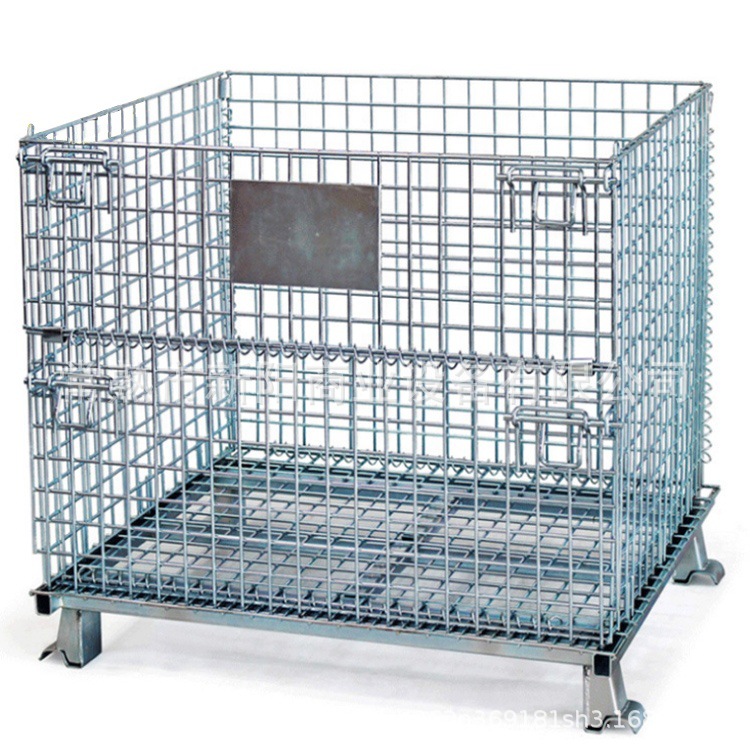
When sourcing storage cages, understanding the manufacturing process is key to ensuring durability and safety. Our production facility integrates advanced welding and bending technologies to create robust wire mesh structures that meet rigorous industrial standards.
Each junction in our storage cages is secured using precision welding equipment. This ensures strong, consistent weld points that can handle heavy loads without deforming. The result is a storage solution that maintains its structural integrity even under extreme weight conditions.
Our machinery performs accurate bending operations to create uniform mesh patterns and frame shapes. This precision guarantees that every storage cage fits perfectly into standard racking systems and pallet dimensions, simplifying your warehouse layout planning.
We use high-grade steel wire that offers an excellent strength-to-weight ratio. The materials are selected for their resistance to corrosion and wear, extending the lifespan of your storage cages and reducing replacement costs over time.
Every batch undergoes strict quality checks before shipment. We verify load capacity, weld strength, and surface finish to ensure that each unit meets your specific operational requirements and safety regulations.
Selecting the ideal storage cage requires balancing several factors, including load capacity, dimensions, and material specifications. A well-chosen cage improves workflow efficiency, while a poor choice can lead to safety hazards and wasted space.
Assess the maximum weight you plan to store. Standard cages typically support 500kg to 1000kg, but reinforced models are available for heavier industrial applications. Always choose a cage with a safety factor above your typical load to prevent failure.
Measure your existing racking systems and pallet sizes carefully. The outer dimensions of the storage cage must fit securely on your pallets and inside your racks. Common sizes include those compatible with EUR and ISO pallet standards.
Consider your operating environment. For humid or outdoor conditions, look for cages with galvanized or powder-coated finishes to resist rust and corrosion. This extends the service life of your investment.
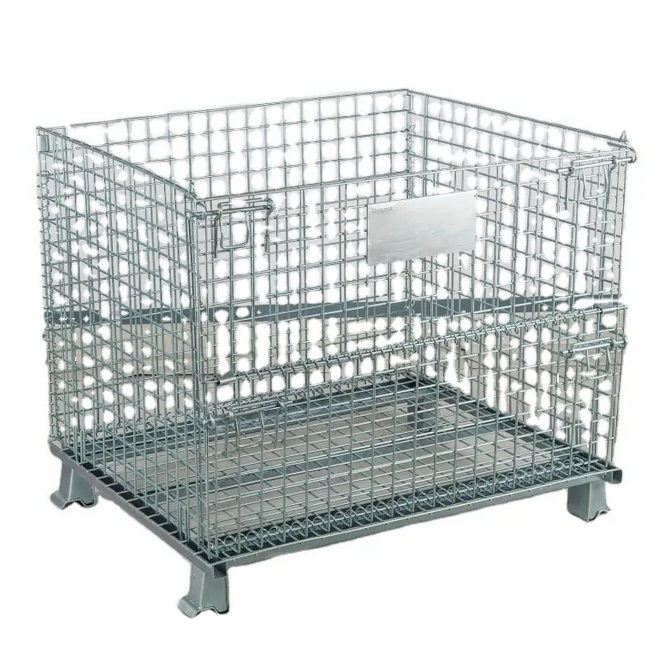
Use this checklist to evaluate potential suppliers and ensure you select the best storage cages for your business needs.
Choosing the right supplier is as important as choosing the right product. Here are key recommendations for finding a reliable partner for your storage cage needs.
Look for suppliers who combine trade expertise with manufacturing capabilities. This integration ensures better quality control, competitive pricing, and direct communication during the production process.
A supplier offering a wide range of warehouse solutions (shelves, trolleys, hooks) can simplify your procurement process. Consolidating orders with one vendor reduces administrative overhead and shipping complexity.
Prioritize suppliers with a history of positive customer feedback and international experience. Their reputation for quality and reliability is often a strong indicator of future performance and partnership stability.
Understanding common pitfalls can help you avoid costly mistakes when buying storage cages.
Some suppliers may exaggerate weight limits. Always request third-party test reports or conduct your own stress tests before placing large orders. Underestimating load requirements can lead to catastrophic failures.
Low-quality coatings can chip or peel, leading to rust and contamination of stored goods. Inspect samples for even coating application and adhesion strength, especially if cages will be used in harsh environments.
Cages that don't fit standard pallets or racks cause major logistical issues. Verify all critical dimensions against your specifications before mass production begins. Tolerances should be minimal to ensure proper fit.
Welds are the weakest link in wire mesh cages. Poor welding can lead to sudden breakage under load. Ask suppliers about their welding technology and quality control procedures for joint integrity.
While both serve similar purposes, "storage cage" typically refers to larger, heavier-duty units designed for industrial racking and pallet use. Wire mesh containers can be smaller and sometimes hand-held. Both offer visibility and ventilation, but cages are built for higher load capacities.
Yes, most manufacturers offer customization options. You can specify dimensions, door configurations, divider placements, and even color coding for organizational purposes. Customization ensures the cages fit seamlessly into your existing infrastructure.
Modern foldable storage cages are engineered to match the durability of fixed units. They feature reinforced hinges and locking mechanisms that maintain structural integrity when in use. Foldable designs are ideal for businesses with fluctuating storage needs or limited return shipping space.
Regular inspection for damage and cleaning with mild detergents is usually sufficient. Avoid abrasive tools that could damage the protective coating. Promptly address any rust spots by touch-up painting to extend the cage's lifespan.
Look for suppliers who comply with international standards such as ISO 9001 for quality management. Additionally, check if their products meet specific regional safety regulations for material handling equipment. Certifications indicate a commitment to quality and safety.
Whatsapp: +44 7761848393
Address: No. 781 Wangzhuang Industrial Park, Yungu Line, Suzhou, Suzhou, Jiangsu China
Website: https://www.vastrolley.com
Privacy statement: Your privacy is very important to Us. Our company promises not to disclose your personal information to any external company with out your explicit permission.
Fill in more information so that we can get in touch with you faster
Privacy statement: Your privacy is very important to Us. Our company promises not to disclose your personal information to any external company with out your explicit permission.