


Please Leave Us A Message
Privacy statement: Your privacy is very important to Us. Our company promises not to disclose your personal information to any external company with out your explicit permission.
 Jiangsu Changshu Vast Import and Export Trade Co.,LTD
Select Language
English


A supermarket logistics transfer vehicle is a specialized material handling tool designed to move large volumes of goods efficiently within retail environments. These vehicles serve as the backbone of store operations, facilitating everything from receiving bulk shipments at the loading dock to restocking shelves and managing waste removal.
Unlike standard hand trucks, these units are engineered for high-frequency commercial use, featuring robust frames capable of withstanding heavy loads and constant movement across varied flooring surfaces. They are critical for maintaining smooth supply chain workflows in busy supermarkets.
Our logistics transfer vehicles are manufactured by Jiangsu Changshu Vast Import and Export Trade Co., LTD, integrating advanced production technology with rigorous quality control. We specialize in designing equipment that minimizes labor costs while maximizing throughput.
Key Benefits:
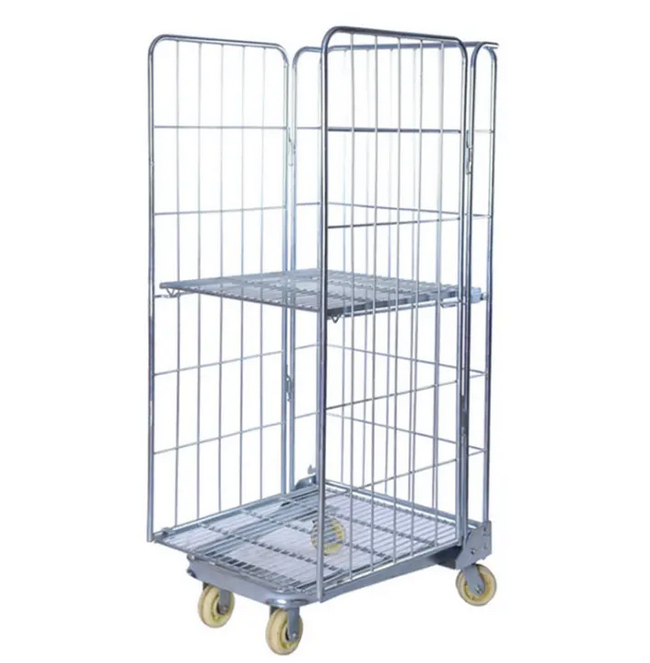
Our facilities utilize state-of-the-art welding, bending, and forming equipment. This technological edge allows us to maintain tight tolerances and consistent structural integrity across all production batches.
We source premium steel alloys known for their strength-to-weight ratio. This ensures our logistics transfer vehicles can handle substantial payloads without compromising maneuverability or durability.
Every unit undergoes strict inspection protocols before shipment. From weld seam analysis to load-bearing tests, we verify that each vehicle meets our high standards for safety and performance.
With extensive production capacity, we can fulfill large orders quickly. This scalability ensures your supply chain remains uninterrupted, even during peak retail seasons.
Selecting the appropriate logistics transfer vehicle depends on several operational factors. Understanding these requirements helps you avoid costly mismatches between equipment capabilities and actual needs.
Determine the maximum weight typically moved per trip. Overloading reduces maneuverability and accelerates wear, so choose a vehicle with a rated capacity exceeding your average load.
Different wheel materials perform better on specific surfaces. Polyurethane wheels offer quiet operation and floor protection on polished concrete, while rubber wheels provide better shock absorption on uneven terrain.
Consider aisle widths and turning radius requirements. Four-wheel swivel casters offer superior agility in tight spaces, whereas two-wheel configurations provide better stability for straight-line transport.
For cold storage or outdoor use, specify vehicles with corrosion-resistant coatings and wheels that maintain traction in low temperatures.
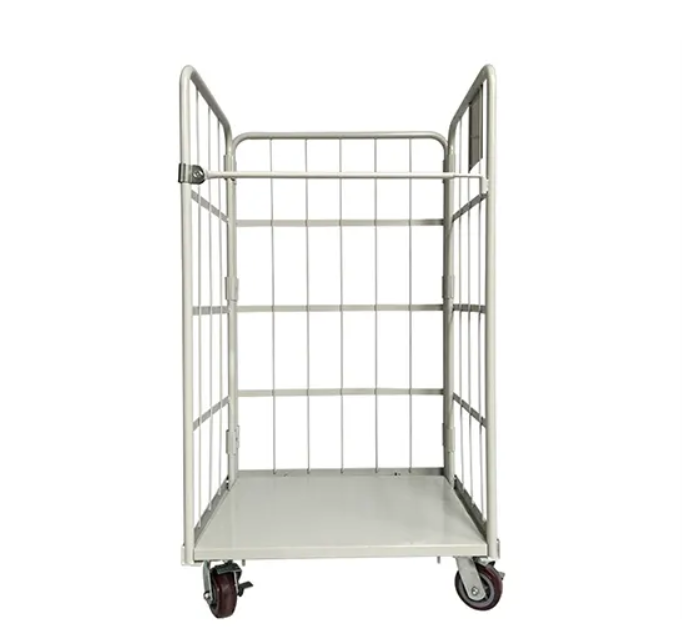
Check for reinforced welds and high-grade steel construction. Ensure the frame can withstand frequent impacts and heavy loads without deformation.
Verify wheel material matches your floor type. Look for smooth-rolling bearings and effective braking mechanisms for safety.
Assess handle height and grip comfort. Ergonomic features reduce staff fatigue and lower the risk of workplace injuries over time.
Confirm if the supplier offers branding, color coding, or size modifications to meet specific operational requirements.
Ensure the manufacturer provides warranty coverage and readily available spare parts for maintenance and repairs.
Evaluate total cost of ownership, including durability and maintenance needs, rather than just the initial purchase price.
Partner with suppliers who combine manufacturing capabilities with trading expertise. This integrated approach streamlines communication, reduces lead times, and ensures direct access to factory pricing.
Choose a supplier offering a wide range of supermarket accessories. Sourcing logistics vehicles alongside shelving and hooks from one vendor simplifies procurement and ensures product compatibility.
Look for manufacturers with a history of positive customer feedback and global market presence. A strong reputation indicates reliability and consistent quality in their logistics transfer vehicles.
Select suppliers that continuously develop new products. An innovative partner will proactively suggest improvements and modern solutions to enhance your operational efficiency.
Ideal for moving bulk goods from receiving docks to backroom storage. Heavy-duty models handle palletized items and case quantities efficiently.
Low-profile designs navigate aisles easily for shelf replenishment. Quiet wheels prevent noise disruption to shoppers during restocking.
Facilitate intra-warehouse transfers between distribution centers and storage zones. Robust construction withstands industrial environments.
Specialized versions with corrosion-resistant coatings and cold-rated wheels operate effectively in freezer and refrigerated environments.
Support sorting and staging operations in high-volume distribution centers. Modular designs allow for quick configuration changes.
Versatile enough for temporary setups, transporting catering supplies, merchandise, or equipment for trade shows and exhibitions.
Premature wear often results from using incorrect wheel types for the floor surface. For example, hard plastic wheels damage polished concrete and wear quickly. Always match wheel material (polyurethane, rubber, or nylon) to your specific flooring conditions and load requirements.
Frame deformation typically occurs when vehicles are overloaded beyond their rated capacity or subjected to impact forces. Ensure you select a model with a safe working load significantly higher than your typical payload, and avoid dropping heavy items onto the platform.
Poor ergonomics and lack of training are common barriers. Invest in vehicles with comfortable handles and smooth maneuverability. Additionally, provide proper training on correct usage techniques to maximize efficiency and safety.
Inadequate surface treatment leads to rapid corrosion, especially in humid or cold storage environments. Choose vehicles with galvanization, powder coating, or other protective finishes to ensure longevity in challenging conditions.
Whatsapp: +44 7761848393
Address: No. 781 Wangzhuang Industrial Park, Yungu Line, Suzhou, Suzhou, Jiangsu China
Website: https://www.vastrolley.com
Privacy statement: Your privacy is very important to Us. Our company promises not to disclose your personal information to any external company with out your explicit permission.
Fill in more information so that we can get in touch with you faster
Privacy statement: Your privacy is very important to Us. Our company promises not to disclose your personal information to any external company with out your explicit permission.