


Please Leave Us A Message
Privacy statement: Your privacy is very important to Us. Our company promises not to disclose your personal information to any external company with out your explicit permission.
 Jiangsu Changshu Vast Import and Export Trade Co.,LTD
Select Language
English


Streamline your food service operations with a reliable dining tray trolley. This guide answers the most common questions from procurement managers and hospitality buyers regarding specifications, materials, and maintenance.
Standard commercial dining tray trolleys typically feature external dimensions around 100cm x 50cm x 110cm, though custom sizes are available to fit specific kitchen or serving constraints. The internal rack spacing is designed to accommodate standard gastronorm (GN) pans or large trays securely. When selecting a model, ensure the footprint allows for smooth maneuvering through standard doorways and service elevators without obstruction.
Stainless steel is the industry standard for dining tray trolleys due to its superior corrosion resistance and ease of sanitation. Look for grades 201 or 304 stainless steel, which withstand frequent washing with harsh detergents and maintain structural integrity. Powder-coated carbon steel is a cost-effective alternative but may require more maintenance to prevent rust in humid environments.
Capacity varies by design, but a standard multi-tier dining tray trolley can typically hold between 12 to 24 trays depending on the depth of the racks. High-capacity models feature adjustable vertical dividers, allowing you to reconfigure the trolley for different batch sizes. Optimizing this capacity reduces the number of trips required, significantly improving staff efficiency during peak service hours.
For smooth operation on tile or hardwood floors, select trolleys equipped with dual-wheel nylon or polyurethane casters. A minimum diameter of 50mm is recommended to reduce rolling resistance and protect flooring surfaces. Ensure at least two wheels include locking brakes to keep the loaded trolley stationary during loading and unloading, enhancing workplace safety.
Yes, manufacturers often offer OEM customization services. You can specify custom powder-coat colors to match your restaurant's interior design or corporate branding. Additionally, load-bearing capacities can be engineered based on your specific operational needs, such as reinforced frames for heavier industrial catering loads versus lightweight versions for banquet service.
Our manufacturing process ensures that every dining tray trolley meets rigorous durability and hygiene standards. We combine advanced welding technology with precise assembly techniques to deliver products that withstand daily commercial use.
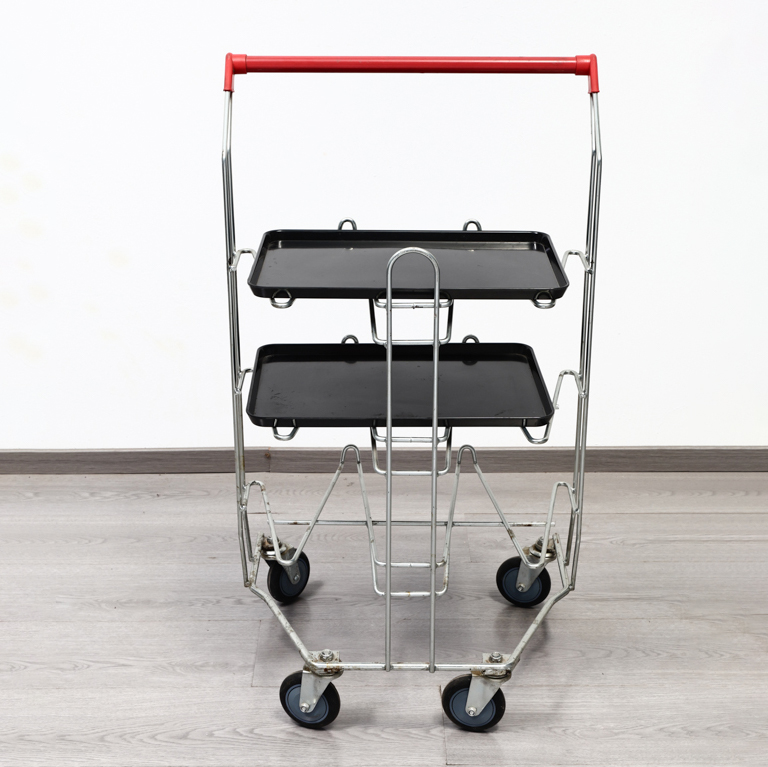
We utilize state-of-the-art welding equipment to create seamless joints on the trolley frame. This technique eliminates weak points where dirt or bacteria could accumulate, ensuring a hygienic surface that is easy to clean. The robust construction supports heavy loads without warping, guaranteeing long-term reliability for high-volume hotels and caterers.
All metal components undergo thorough surface treatment, including polishing and powder coating. This protective layer resists scratches, chemicals, and moisture, extending the lifespan of the trolley even in demanding kitchen environments. The finish maintains a professional appearance over time, reducing the need for frequent replacements.
A dining tray trolley is a specialized piece of hospitality equipment designed for the efficient transport, storage, and organization of tableware, food trays, and serving dishes. Constructed primarily from durable materials like stainless steel or coated steel, these carts are essential for back-of-house operations in restaurants, hotels, and institutional cafeterias.
Unlike standard utility carts, dining tray trolleys feature specific rack configurations that maximize vertical space while keeping items secure during transit. They play a critical role in streamlining workflow, allowing staff to move large quantities of clean or soiled dishes with minimal effort. By investing in a high-quality trolley, facilities can reduce manual handling injuries and improve overall service speed.
Selecting the appropriate serving cart requires evaluating your facility's specific layout, load requirements, and hygiene protocols. Consider the following factors to ensure optimal performance and longevity.
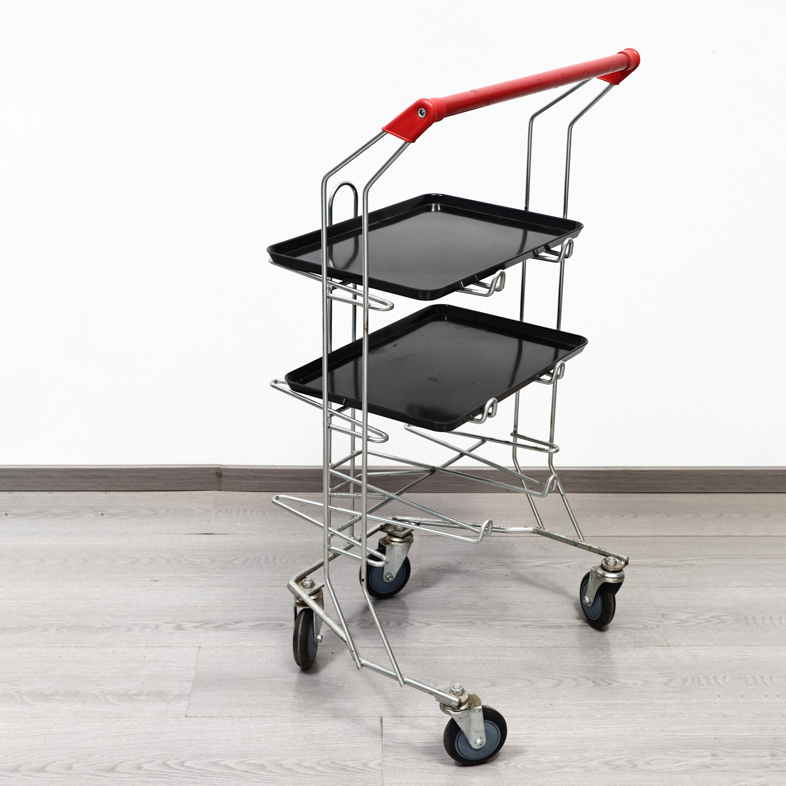
Stainless steel trolleys offer superior hygiene and durability, making them ideal for high-end hotels and strict health-code environments. They resist corrosion and do not harbor bacteria. Powder-coated steel options are lighter and more affordable, suitable for dry storage or lower-frequency use, but may require more careful maintenance to prevent rust.
Assess the flooring conditions in your facility. For smooth tiles, soft-tread nylon wheels prevent damage and noise. For uneven surfaces or outdoor service, larger pneumatic or heavy-duty rubber wheels provide better stability. Ensure the trolley has adequate turning radius for narrow corridors and service areas.
Look for trolleys with adjustable shelf heights or removable dividers. This modularity allows you to adapt the cart for different tasks, such as transporting tall beverage bottles one day and flat dinner plates the next. Customizable features maximize the utility of each unit across various departments.
Use this checklist to evaluate potential suppliers and products before finalizing your purchase of dining tray trolleys. Ensuring compliance with these criteria mitigates risk and guarantees value.
Verify that the supplier provides proof of material grade (e.g., 304 Stainless Steel) to ensure it meets food-grade safety standards.
Confirm the static and dynamic load limits. The trolley must support the maximum weight of fully loaded trays without structural deformation.
Inspect caster specifications. Dual-wheel designs with reliable locking mechanisms are essential for safety and floor protection.
Ensure the manufacturer offers a clear warranty policy covering structural defects and provides accessible spare parts for maintenance.
When sourcing dining tray trolleys, partnering with an established manufacturer-integrator like Jiangsu Changshu Vast Import and Export Trade Co., LTD offers distinct advantages. Their integrated approach to industry and trade ensures competitive pricing without compromising on quality.
By working directly with the production facility, buyers eliminate middleman markups. This direct relationship allows for greater transparency in the manufacturing process and faster response times to inquiries.
Suppliers offering a comprehensive range of supermarket and hospitality equipment allow you to consolidate orders. Sourcing trolleys alongside shelves, hooks, and storage racks simplifies logistics and reduces shipping costs.
Look for suppliers with a history of exporting to diverse markets. Their experience with international standards ensures that products meet global expectations for durability, finish, and safety.
Commercial dining tray trolleys are versatile assets used across various sectors of the hospitality and retail industries. Their design caters to specific logistical needs in each environment.
Used extensively in housekeeping for linen transport and in banquets for serving cutlery and glassware. Durable finishes ensure they maintain a premium appearance in guest-facing areas.
Hospitals, schools, and corporate cafeterias rely on high-capacity trolleys for bulk meal distribution. Efficient transport systems help manage tight service windows and high volume.
Compact, elegant trolleys are used for tableside service, wine presentation, and clearing tables efficiently. Smooth-rolling casters prevent noise disruption during meals.
Procurement teams often encounter specific challenges when ordering commercial kitchen equipment. Addressing these issues upfront prevents costly mistakes and operational delays.
Solution: Always request detailed load test reports. Underestimated capacity leads to bent frames and collapsed wheels. Specify your maximum expected load plus a 20% safety margin.
Solution: Cheap casters jam easily and damage floors. Inspect wheel bearings and tread material. Opt for sealed bearings to prevent debris accumulation and ensure smooth rotation.
Solution: Verify the thickness and quality of the powder coating or stainless steel grade. Thin coatings chip easily, exposing bare metal to rust. Request samples to test scratch resistance.
Solution: Measure your storage spaces and doorways precisely before ordering. Standard sizes may not fit all layouts. Communicate exact spatial constraints to the manufacturer for custom fitting.
Whatsapp: +44 7761848393
Address: No. 781 Wangzhuang Industrial Park, Yungu Line, Suzhou, Suzhou, Jiangsu China
Website: https://www.vastrolley.com
Privacy statement: Your privacy is very important to Us. Our company promises not to disclose your personal information to any external company with out your explicit permission.
Fill in more information so that we can get in touch with you faster
Privacy statement: Your privacy is very important to Us. Our company promises not to disclose your personal information to any external company with out your explicit permission.