


Please Leave Us A Message
Privacy statement: Your privacy is very important to Us. Our company promises not to disclose your personal information to any external company with out your explicit permission.
 Jiangsu Changshu Vast Import and Export Trade Co.,LTD
Select Language
English


A plastic tray is a flat, rigid container used for holding, storing, and transporting goods within a supply chain or retail environment. Unlike baskets with high sides, trays are typically open-topped and low-profile, designed to stack securely or nest efficiently when not in use.
In the context of industrial plastic storage solutions, these trays serve as critical components for inventory management. They provide a stable base for parts, documents, or lightweight products, ensuring that items remain organized and protected from dust and damage during handling.
Common applications include automotive assembly lines, electronics manufacturing, warehouse picking, and retail merchandising. Their durability and hygienic surface make them suitable for both heavy-duty industrial use and clean-room environments.

Our manufacturing partners utilize advanced injection molding technology to produce high-strength plastic trays with consistent dimensional accuracy. This precision ensures that every tray stacks perfectly, maximizing vertical storage space in warehouses and reducing the risk of toppling loads.
The materials selected are chosen for their impact resistance and longevity. Whether dealing with cold chain logistics or high-temperature sterilization processes, these trays maintain their structural integrity without cracking or warping, lowering your total cost of ownership over time.
Rigorous quality checks at every stage guarantee that each unit meets international standards for load-bearing capacity and material purity, giving you confidence in every shipment.
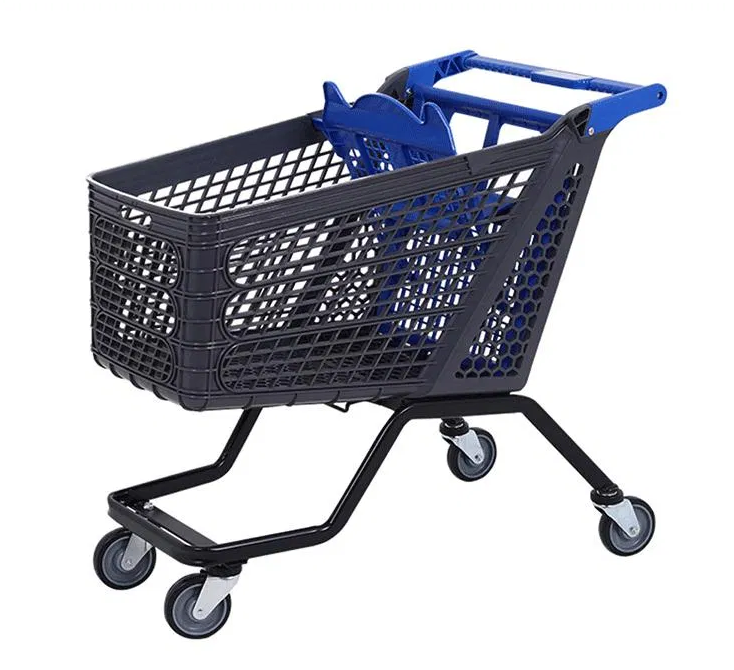
Selecting the optimal plastic tray supplier requires evaluating several technical factors against your operational requirements:
Determine the static and dynamic weight limits. Heavy-duty trays may require reinforced ribs, while light-duty options focus on nesting efficiency.
HDPE offers chemical resistance and flexibility; PP provides higher heat tolerance. Select based on your environmental conditions.
Standardized sizes (like Eurotrays) ensure compatibility with existing pallets and racking systems. Nesting designs reduce return shipping costs.
Smooth, non-porous surfaces are essential for food-grade or pharmaceutical applications where sanitation is critical.
Before finalizing your procurement order, use this checklist to ensure you are partnering with the right supplier and selecting the correct product specifications.
Can the supplier offer custom colors, logos, or dimensions to fit your specific branding or machinery?
Verify ISO, SGS, or FDA compliance if required for your industry (e.g., food or medical).
Always request physical samples to test fit, feel, and durability before committing to bulk orders.
Confirm production lead times and buffer for potential delays to keep your supply chain moving.
Ensure trays can be nested or stacked tightly to minimize shipping volume and reduce freight costs.
Does the supplier offer responsive communication and warranty policies for defective units?
When sourcing wholesale plastic trays, prioritize manufacturers with established production capabilities and a track record of export quality. Look for suppliers who combine engineering expertise with reliable logistics.
Seek companies that handle both design and production. This vertical integration often results in better pricing, faster iteration, and stricter quality control compared to trading-only intermediaries.
Choose suppliers familiar with international shipping standards. They should understand packaging requirements to prevent damage during transit and handle documentation seamlessly.
Effective procurement relies on clear communication. Select suppliers who provide timely updates, proactive problem-solving, and dedicated account support throughout the order lifecycle.
Understanding common pitfalls can save significant time and money. Here are frequent issues buyers encounter and how to avoid them.
The Problem: Trays do not fit standard pallets or racks due to manufacturing tolerances.
The Solution: Request detailed CAD drawings and verify critical dimensions against your equipment specs before mass production.
The Problem: Trays become brittle or discolored after prolonged UV exposure or chemical contact.
The Solution: Specify UV-stabilized additives for outdoor use and confirm chemical compatibility with your cleaning agents.
The Problem: Ordering too many units ties up capital and storage space.
The Solution: Implement just-in-time ordering with reliable suppliers who offer flexible MOQs and quick turnaround times.
The Problem: Trays slip or tip when stacked, causing product damage.
The Solution: Inspect anti-slip features and interlocking designs. Test stack stability under load before approving the final batch.
Get answers to the most common questions from global buyers regarding specification, customization, and logistics.
MOQs vary by manufacturer but typically range from 500 to 1,000 units for custom molds. Standard, off-the-shelf trays often have lower MOQs or no minimum, making them ideal for trial orders.
Yes, most industrial plastic trays are made from HDPE or PP, which are highly recyclable. Many suppliers offer take-back programs or can advise on local recycling facilities to support your sustainability goals.
Compatibility depends on precise dimensions and bottom profile. Provide your equipment supplier's specs to your tray manufacturer. They can engineer the tray's base to match roller spacing and friction requirements.
For standard items, lead time is usually 7-15 days. For custom-designed trays requiring new mold creation, expect 25-35 days for tooling plus production time. Always confirm timelines in your contract.
Many plastics retain toughness at low temperatures, but some become brittle. Polypropylene (PP) generally performs well in cold chains. Specify "cold storage grade" when ordering to ensure material suitability.
Whatsapp: +44 7761848393
Address: No. 781 Wangzhuang Industrial Park, Yungu Line, Suzhou, Suzhou, Jiangsu China
Website: https://www.vastrolley.com
Privacy statement: Your privacy is very important to Us. Our company promises not to disclose your personal information to any external company with out your explicit permission.
Fill in more information so that we can get in touch with you faster
Privacy statement: Your privacy is very important to Us. Our company promises not to disclose your personal information to any external company with out your explicit permission.